Watching the Northern Lights Without Chasing the Forecast
A calm approach to a night-sky outing: prepare for darkness, choose a comfortable viewpoint, and let the evening be worthwhile even if the aurora stays faint.
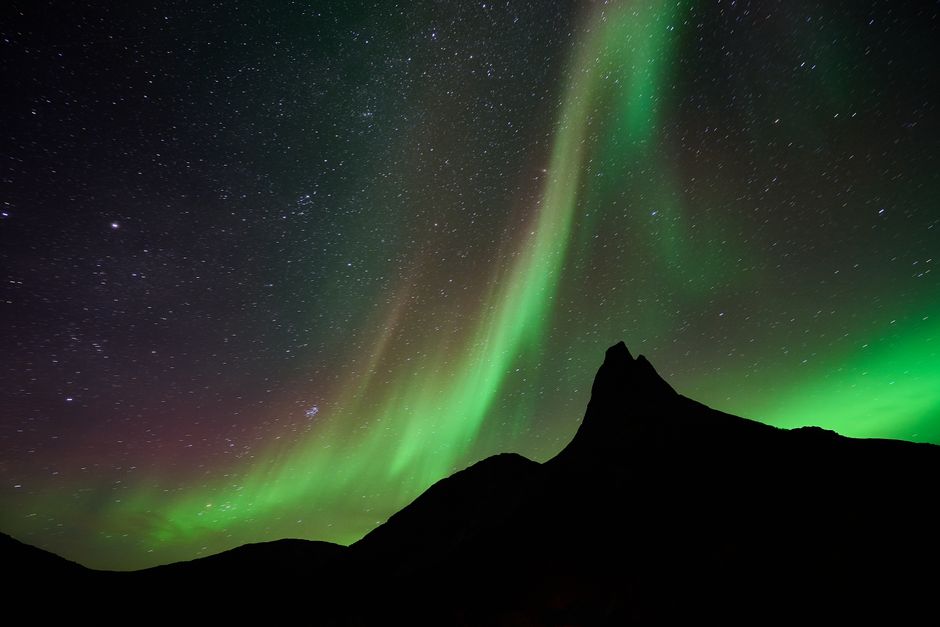
There is a particular temptation in aurora season to turn the sky into a scoreboard. Forecast apps are refreshed every few minutes, cloud maps are compared, and an ordinary evening starts to feel successful only if a bright green ribbon appears on command. A better night often begins by lowering the stakes.
The northern lights are unpredictable enough that the most useful plan is one that still works without them. Choose a place where you would happily spend an hour in the dark, bring enough warmth to stay comfortable, and treat any visible aurora as an addition rather than the whole purpose of the outing.
Pick comfort before drama
A wide horizon matters, but so does being able to stand safely and wait. A modest hill, a quiet shoreline, or a familiar road pull-off can be better than a spectacular viewpoint that requires a long climb in darkness. Visit the location in daylight if it is new to you. Notice uneven ground, fences, water edges, and where you can step away from passing headlights.
Darkness changes distance. A ten-minute walk can feel much longer when the path disappears beyond the reach of a small torch, so keep the route simple. If the wind is strong, choose shelter over altitude. You will notice more when you are not thinking about cold hands.
Pack for waiting
The useful kit is small: warm layers, gloves you can operate a camera in, a flask, a headlamp with a low setting, and a cloth for damp lenses. A folded sit mat weighs almost nothing and makes a long pause surprisingly comfortable. If you are photographing the sky, set up before your fingers get cold.
For most cameras, a wide lens and a stable support are enough. Start with a short exposure rather than an extremely long one; movement in the aurora can turn to a soft blur if the shutter stays open too long. Take a test frame, check the stars for focus, then put the screen brightness down so your eyes can return to the dark.
Give your eyes time
A weak aurora does not always look green at first. To the eye it may appear as a pale band or a patch of unusual brightness. After ten or fifteen minutes away from bright screens, subtle structure becomes easier to see. Look for vertical rays, slow changes in shape, and sections of sky that seem lighter than surrounding cloud.
There is no need to stare north without moving. Turn around. Look at the stars overhead, listen for water or wind, and notice how familiar land changes after sunset. A night sky outing becomes richer when it is not reduced to one phenomenon.
Know when the evening is already enough
If cloud closes in or the forecast weakens, resist the urge to keep driving in search of a perfect gap. Some of the most memorable nights outdoors are quiet ones: a thermos on a dark hillside, a few clear constellations, the sound of grass in the wind. The aurora may appear for five minutes, or not at all.
The point is to create an evening that does not need rescuing by the sky. When the lights do arrive, you are already in the right place to enjoy them.